The goal of cosmetic dentistry is to improve the way your teeth, gums, and smile look. Whether you want to get rid of a chipped tooth, whiten your teeth, or give your smile a makeover, it includes a broad range of treatments intended to enhance its appearance. Cosmetic dentistry is primarily concerned with how your teeth and smile look overall, as opposed to general dentistry, which concentrates on oral hygiene and treating oral illnesses.
Teeth whitening is one of the most common cosmetic dental procedures. Coffee, tea, smoking, and some medications are just a few of the things that can cause teeth to discolor or become stained over time. Bleaching agents are used in teeth whitening procedures to get rid of these stains, giving the smile a brighter, more lively appearance. Teeth whitening, whether done at the dentist’s office or at home with take-home kits, can greatly increase your self-confidence.
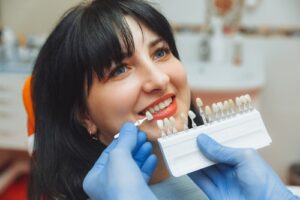
Another popular cosmetic dental option is veneers. These are tiny shells, custom-made to cover the front surface of your teeth, composed of composite resin or porcelain. Many aesthetic problems, including chipped, cracked, misaligned, or discolored teeth, can be resolved with veneers. Because they are created to order, they have a natural appearance and feel and fit in perfectly with your natural teeth. To provide a snug fit for the veneer, a small bit of enamel must be removed from the tooth’s surface throughout the procedure.
When it comes to cosmetic procedures, dental bonding is more conservative than veneers. The tooth is covered in a resin substance that matches the color of the tooth, which is subsequently formed and cemented using a specialized light. Bonding can be used to bridge gaps, fix fractured or broken teeth, or alter the contour of a tooth. It may typically be finished in a single dental appointment and is a quick and affordable choice for small cosmetic modifications.
Clear aligners and traditional braces are two choices available from cosmetic dentistry for people who want to straighten their teeth. Because they are almost undetectable and can be taken out for eating or brushing, clear aligners, like Invisalign, have grown in popularity. These aligners provide a more visually acceptable option to traditional braces by gradually moving your teeth into the ideal position without the use of metal brackets and wires.
In cosmetic dentistry, partial crowns, or inlays and onlays, are an additional alternative. These restorations are manufactured to order and are placed into or on the surface of the tooth to fix decay or injury. Inlays and onlays, which are strong and long-lasting, blend in with your natural teeth and can be made of gold, composite resin, or porcelain. When a tooth is too damaged for a filling but not enough to need a complete crown, they are frequently used.
A more sophisticated option in cosmetic dentistry, dental implants offer a long-term fix for missing teeth. A titanium post that serves as an artificial tooth root is surgically inserted into the mandible to create an implant. A crown is placed on top of the implant after it has fused with the bone, resulting in a replacement tooth that looks and functions like the original. In addition to improving the appearance of your smile, dental implants stop the jaw’s natural bone loss that can happen when teeth are lost.
Gum contouring, a technique used in cosmetic dentistry, repositions the gum line to produce a smile that is less “gummy” or more symmetrical. Those who believe that their gums overshadow their teeth and throw off the harmony of their smile may find this to be especially helpful.
In general, cosmetic dentistry provides a wide range of alternatives to improve your smile, regardless of whether you want to make small tweaks or a major makeover. These operations are now more accessible and effective than ever because to developments in technology and materials, giving you the smile of your dreams.